
Pool Pump Types Explained: Energy-Efficient Options That Save Money for Your Knoxville Inground Pool
- Admin Top Knox
- Apr 10
- 7 min read

Why Your Pool Pump Choice Matters
Your pool pump is the heart of your swimming pool system. It's responsible for circulating water, distributing chemicals, and maintaining crystal-clear water throughout the swimming season. Yet many pool owners in Knoxville, Tennessee, don't realize that their choice of pump can make a dramatic difference in their monthly energy bills—sometimes by hundreds of dollars annually.
Consider this: A standard single-speed pump runs at full capacity 24/7, consuming between 1.5 and 2.7 kilowatts per hour. Over a typical pool season, that's one of the highest energy expenses you'll face as a homeowner. But here's the good news—modern, energy-efficient pumps can slash those costs by 50% to 70% while actually improving water quality and extending your pool's lifespan.
At Top Knox Pools, we've helped hundreds of homeowners and businesses throughout Knoxville, Alcoa, Oak Ridge, and surrounding areas transform their pools with smarter pump technology. In this guide, we'll break down the different types of inground pool pumps available, explain how each works, and show you exactly how much money you can save by upgrading.

Understanding Pool Pump Basics: The Foundation
Before diving into specific pump types, it's essential to understand what your pump does and why efficiency matters.
A pool pump serves three critical functions:
Circulation: Moving water through the filter system to remove debris and particles
Sanitization: Distributing chemicals evenly throughout the pool
Aeration: Adding oxygen to the water for crystal-clear clarity
The energy efficiency of your pump determines how much electricity you'll consume to accomplish these tasks. According to the U.S. Department of Energy, pool pumps account for approximately 30-50% of a typical residential pool's energy consumption—sometimes reaching 90% on properties with older equipment.
The Four Main Types of Inground Pool Pumps
1. Single-Speed Pumps: Traditional But Costly
What They Are: Single-speed pumps are the original pool pump technology. They run at a fixed RPM (typically 3,450 RPM) whenever they're turned on and operate at full capacity regardless of actual filtration needs.
How They Work: Once activated, a single-speed pump delivers the same gallons-per-minute (GPM) output continuously until turned off. They're straightforward, affordable upfront, and widely available.
The Energy Problem: Single-speed pumps are energy hogs. A typical residential model consumes 2,000-3,000 watts per hour. If you run it 8 hours daily for 6 months, that's approximately 3,000-4,500 kWh annually—translating to $360-$540+ on your electric bill (based on average Tennessee electricity rates of $0.12 per kWh).
Who Should Choose This:
Budget-conscious homeowners making initial pool installations
Homes with already-installed single-speed pumps that are still functioning
Situations where long-term cost savings aren't the priority
Upgrade Potential: If you currently have a single-speed pump, upgrading to a variable-speed model could recover your investment in 3-5 years through energy savings alone.
2. Two-Speed Pumps: A Middle Ground Solution
What They Are: Two-speed pumps offer a low speed (approximately 1,725 RPM) and a high speed (approximately 3,450 RPM), giving you flexibility based on pool needs.
How They Work: You can operate these pumps at high speed for heavy-duty filtration and water feature circulation, then switch to low speed for routine maintenance and circulation. This gives you two operating efficiency levels instead of one.
Energy Savings: Operating at low speed reduces energy consumption significantly compared to single-speed models. You might reduce annual energy costs by 30-40%, saving $100-$200 annually compared to continuous single-speed operation.
Pros:
More affordable than variable-speed options
Better energy efficiency than single-speed pumps
Adequate for standard residential inground pools
Cons:
Only two operating levels; less optimization than variable-speed
Not ideal for pools with extensive features or special requirements
Still consumes considerable energy during high-speed cycles
Best For: Homeowners looking for a reasonable efficiency upgrade without the premium cost of variable-speed technology.
3. Variable-Speed Pumps: The Energy Efficiency Champion
What They Are: Variable-speed pumps use advanced motor technology to operate at any RPM between 500 and 3,450, adjusting automatically or manually to match your pool's actual circulation needs.
How They Work: These pumps feature permanent magnet motors (similar to hybrid car engines) that consume exponentially less electricity at lower speeds. They're programmable, so you can set schedules that optimize energy consumption for different times of day or pool activities.
The Energy Impact: Variable-speed pumps reduce annual energy consumption by 50-70% compared to single-speed models. A homeowner might spend only $100-$150 annually on pump electricity—compared to $400-$500 for single-speed operation.
Real-World Example: Sarah Mitchell in Knoxville upgraded her inground pool from a single-speed to a variable-speed pump. Her monthly energy costs dropped from $45 to $18 during pool season. Over five years, that's approximately $1,620 in savings—and her water quality actually improved because the pump runs more frequently at lower, quieter speeds.
Advanced Features:
WiFi connectivity for remote scheduling
Integration with automation systems
Quiet operation (often 25-50% quieter than single-speed)
Longer motor lifespan (typically 15-20 years vs. 8-12 years)
Investment vs. Return: Variable-speed pumps cost $1,200-$2,500 installed, compared to $400-$900 for single-speed. However, the payback period is typically 3-5 years through energy savings alone. After that, you're essentially running your pool pump for free—or nearly free.
4. Dual-Port and Specialty Pumps: Custom Solutions
When You Need Them: Some pools require specialized pumps for water features, extensive plumbing, or commercial applications. These include:
Booster pumps: For water features, slides, or pressure-side cleaners
Dual-port pumps: For split plumbing systems or multiple filtration zones
Cartridge pump systems: For smaller pools or specialized filtration needs
Most residential pools in Knoxville combine a main circulation pump (single, two-speed, or variable-speed) with a booster pump for features.
How to Calculate Your Pump's Annual Energy Cost
Use this formula to determine your current pump's yearly energy expense:
Annual Cost = (Pump wattage ÷ 1,000) × Hours per day × Days per year × Cost per kWh
Example Calculation:
Single-speed pump: 2,500 watts
Operating hours: 8 hours daily
Pool season: 180 days
Electricity cost: $0.12 per kWh
(2,500 ÷ 1,000) × 8 × 180 × $0.12 = $432 annually

Choosing the Right Pump for Your Inground Pool in Knoxville
The best pump for your pool depends on several factors:
Pool Size: Larger pools require higher GPM capacity. A 15,000-gallon pool needs 1.5-2 turnovers per 8-hour cycle, translating to specific GPM requirements. Our team at Top Knox Pools can calculate the exact specifications for your pool.
Usage Patterns: Heavily-used pools benefit more from variable-speed pumps because they can optimize for different activities throughout the day.
Budget Constraints: If upfront cost is critical, two-speed pumps offer a good balance. If long-term savings matter most, variable-speed is the clear winner.
Climate Considerations: East Tennessee's warm summers mean longer pool seasons—maximizing the value of energy-efficient upgrades.
Local Installation Support: Working with a knowledgeable local contractor like Top Knox Pools ensures proper installation, correct sizing, and ongoing optimization.
Beyond the Pump: Complementary Energy-Saving Tips
Choosing an efficient pump is step one. Here's how to maximize your energy savings:
Use a Timer: Run your pump only during necessary hours—typically 6-8 hours daily during off-season, 8-10 hours during active season.
Add a Variable-Speed Filter Valve: Complements your variable-speed pump by optimizing water flow through your filter.
Install a Pool Cover: Reduces evaporation by 95%, meaning your pump doesn't work as hard to maintain water chemistry.
Upgrade Your Filter: A high-efficiency cartridge filter works better with variable-speed pumps, reducing necessary operating hours.
Regular Maintenance: Clean filters, balanced water chemistry, and seasonal inspections keep everything running efficiently. Top Knox Pools offers comprehensive maintenance plans for pools throughout Knoxville, Alcoa, and Oak Ridge.
Top Knox Pools' Recommendation: Why We Advocate Variable-Speed
After over a decade of serving inground pool owners across Knoxville and surrounding communities, we've seen thousands of households upgrade their pump systems. The data is clear: variable-speed pumps deliver the best combination of energy savings, improved water quality, longevity, and environmental responsibility.
Our customers consistently report:
50-70% reductions in annual energy costs
Quieter pool operation
Better water circulation and clarity
Longer equipment lifespan
Increased home resale value
Featured Snippet Opportunity: Quick Comparison Table
Pump Type | Annual Energy Cost* | Upfront Cost | Lifespan | Best For |
Single-Speed | $400-$500 | $400-$900 | 8-12 years | Basic, budget-conscious |
Two-Speed | $250-$350 | $600-$1,200 | 10-14 years | Moderate efficiency needs |
Variable-Speed | $100-$150 | $1,200-$2,500 | 15-20 years | Maximum savings & efficiency |
*Based on 8-hour daily operation during 180-day pool season at $0.12 per kWh
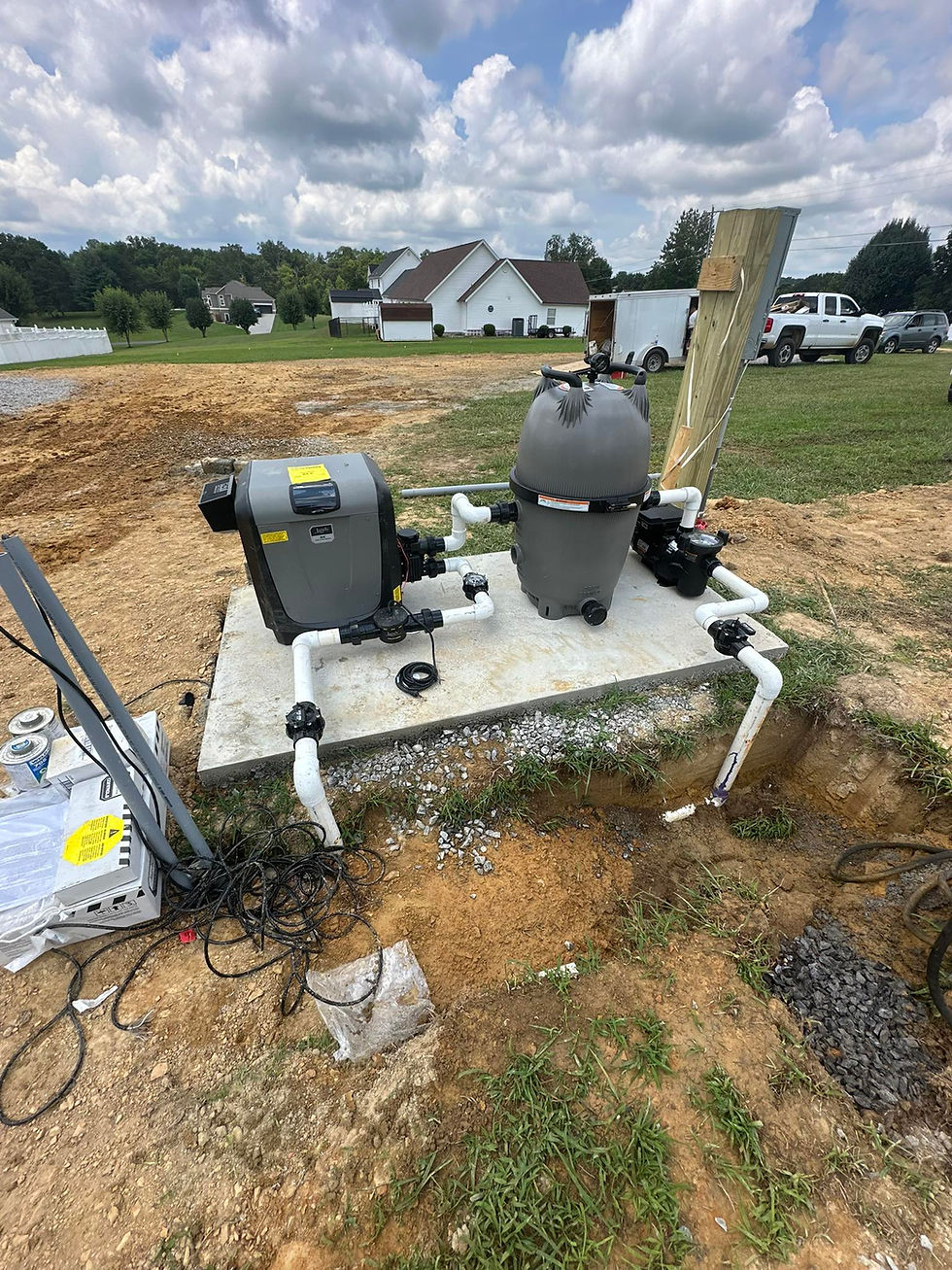
Local Service Area: Serving Greater Knoxville
Top Knox Pools proudly serves homeowners and commercial facilities throughout:
Knoxville, Tennessee
Alcoa
Oak Ridge
Sevier County
Knox County
Surrounding East Tennessee Communities
Whether you're looking to install a brand-new inground pool with energy-efficient equipment or upgrade an existing system, our team has the expertise to deliver excellence.
Common Questions About Pool Pumps
Q: Can I upgrade my single-speed pump to variable-speed without replacing my entire system?
A: Yes! In most cases, variable-speed pumps are compatible with existing plumbing and equipment. Our technicians at Top Knox Pools can assess your specific setup and handle the professional installation.
Q: How long until my variable-speed pump pays for itself?
A: Most homeowners recover their investment within 3-5 years. After that, you're essentially enjoying free pool pump operation.
Q: Will a variable-speed pump work in winter?
A: Absolutely. Many East Tennessee homeowners use low-speed circulation during off-season for maintenance, which uses minimal electricity.
Call Top Knox Pools Today for Expert Guidance
Don't let an outdated, inefficient pump drain your wallet month after month. The team at Top Knox Pools specializes in helping Knoxville homeowners optimize their inground pool systems for maximum efficiency, superior water quality, and significant cost savings.
Ready to save up to $400 annually on pool pump energy costs?
Call Top Knox Pools at (865) 335-8047 to schedule your free consultation. Our experts will evaluate your current pump system, calculate potential savings specific to your pool, and recommend the best energy-efficient solution for your needs and budget.
[Internal Link: View our pool upgrade portfolio and customer testimonials]
Or visit our website to learn more about our comprehensive pool services, including pump installation, system upgrades, maintenance plans, and seasonal opening and closing services.
Your pool should be a source of joy, relaxation, and family memories—not unexpected energy bills. By understanding the different types of inground pool pumps and choosing the right one, you're investing in both your comfort and your financial peace of mind.
Variable-speed pumps represent the pinnacle of pool pump technology, delivering dramatic energy savings, environmental responsibility, and superior water quality. Whether you're building a new inground pool or upgrading an existing system, the efficiency choice is clear.
The experts at Top Knox Pools have spent years helping homeowners throughout Knoxville, Alcoa, Oak Ridge, and East Tennessee transform their outdoor spaces. We're committed to providing not just pools, but sustainable, cost-effective aquatic solutions that families enjoy for decades.
Don't wait another month to start saving on energy costs.
Transform your pool with Top Knox Pools. Contact us at (865) 335-8047 today for your free energy-efficiency consultation, or visit our website to schedule a site visit. Let's discuss which pump option is right for your Knoxville inground pool.


Comments